

Perchance to Dream
Perchance to Dream is Harptree's fiction journal - a space for scenes, voices, sketches, discarded paths and glimpses behind the finished work.
Here, imagination is allowed to wander before it becomes a book.
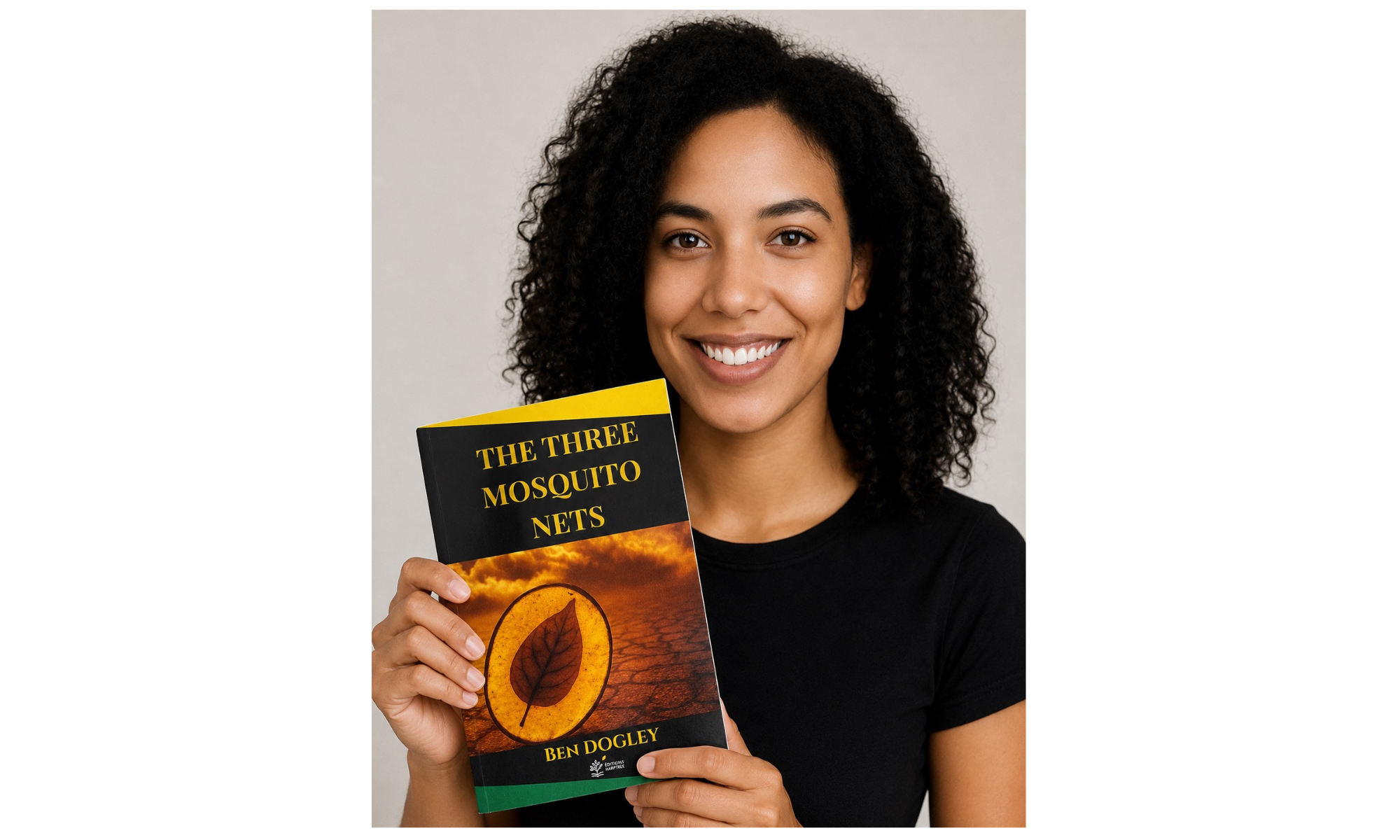
Le visage humain du climat
The Three Mosquito Nets nous rappelle avant tout l’importance de la reconnaissance de l’autre, de notre humanité commune. Le récit pose une question simple mais essentielle : comment sommes-nous présents les uns pour les autres dans un monde en crise ?
La lutte climatique est collective. Nous ne sortirons de cette impasse qu’ensemble. Pourtant, les objectifs climatiques eux-mêmes peuvent parfois sembler aussi déshumanisants que les logiques d’exploitation des ressources qui ont créé le problème. À force de parler en chiffres, en modèles économiques et en courbes d’émissions, nous risquons de perdre de vue ce qui est réellement en jeu : des vies humaines.
Lors de la clôture de la COP30, plusieurs observateurs ont rappelé cette réalité. Derrière les discours diplomatiques se trouvent des pays, des communautés et des individus qui vivent déjà les conséquences du dérèglement climatique. Les nations du Sud réclament non seulement des objectifs, mais aussi des moyens concrets de transition : soutien financier, restructuration de dettes, alternatives économiques crédibles. Sans cela, la décarbonation risque de devenir une nouvelle forme de colonialisme vert.
Le paradoxe est partout. Les technologies présentées comme solutions — panneaux solaires, extraction des minerais nécessaires à la transition énergétique — participent elles aussi à de nouvelles formes de pression écologique et sociale. Mais cette contradiction ne signifie pas qu’il faille renoncer à agir. Elle révèle simplement la complexité du moment historique dans lequel nous vivons.
C’est précisément ce que découvre Heather Sinclair-Johnson, protagoniste de The Three Mosquito Nets. Étudiante mancunienne, Heather voyage moins pour imposer un discours que pour apprendre à écouter. En Indonésie, elle se confronte à la réalité vécue des populations situées « au front » du changement climatique.
Elle comprend rapidement qu’il est facile de désigner des responsables abstraits, beaucoup plus difficile de regarder les êtres humains pris dans des systèmes économiques qu’ils n’ont pas créés :
“The planet isn’t dying from evil. It’s dying from people trying to survive a system that was never built for them.”
« La planète ne meurt pas à cause du mal. Elle meurt parce que des gens essaient simplement de survivre dans un système qui n’a jamais été construit pour eux. »
Heather découvre également une autre manière d’habiter le monde. Chez les Dayak Iban, la forêt n’est pas une “ressource” mais une relation vivante. La terre, l’eau et les êtres humains appartiennent à une même continuité. Pour quelqu’un issu d’un univers urbain occidental, cette vision agit presque comme un choc culturel et spirituel.
Le roman interroge aussi le rôle des grandes conférences climatiques. Les COP produisent des accords, des objectifs et des promesses, mais leur langage semble parfois éloigné des réalités de terrain. En parallèle, d’autres initiatives émergent : coopérations régionales, économies locales, modèles de transition plus ancrés dans le quotidien.
Lors d’une escale aux Seychelles, Heather découvre par exemple une approche de “l’économie bleue” fondée sur la protection des ressources marines, la pêche durable et les échanges dette-nature. Là encore, ce qui frappe n’est pas seulement la politique, mais la manière dont les habitants parlent de la mer : non comme d’un décor ou d’un actif économique, mais comme d’un lien vital.
Au fond, The Three Mosquito Nets ne propose pas de solution miracle. Le livre refuse les certitudes faciles. Il rappelle simplement que la crise climatique est autant une question humaine qu’environnementale. Nous ne réparerons pas le monde uniquement avec des technologies ou des tableaux Excel. Nous devons aussi apprendre à écouter, à reconnaître les contradictions, et à agir malgré elles.
Car l’avenir ne se construit pas seulement dans les sommets internationaux ou les grands discours. Il se construit aussi dans les gestes modestes, les solidarités discrètes et les choix quotidiens.
“[The future of this world is] made in actions. Quiet ones. Decent ones. Ones that don’t need applause.”
« Des actions silencieuses. Décentes. Qui n’ont pas besoin d’applaudissements. »
Les lecteurs souhaitant prolonger le voyage de Heather peuvent également découvrir le I Am Heather Challenge de Harptree Books.
— Jo Astridge
Harptree Books
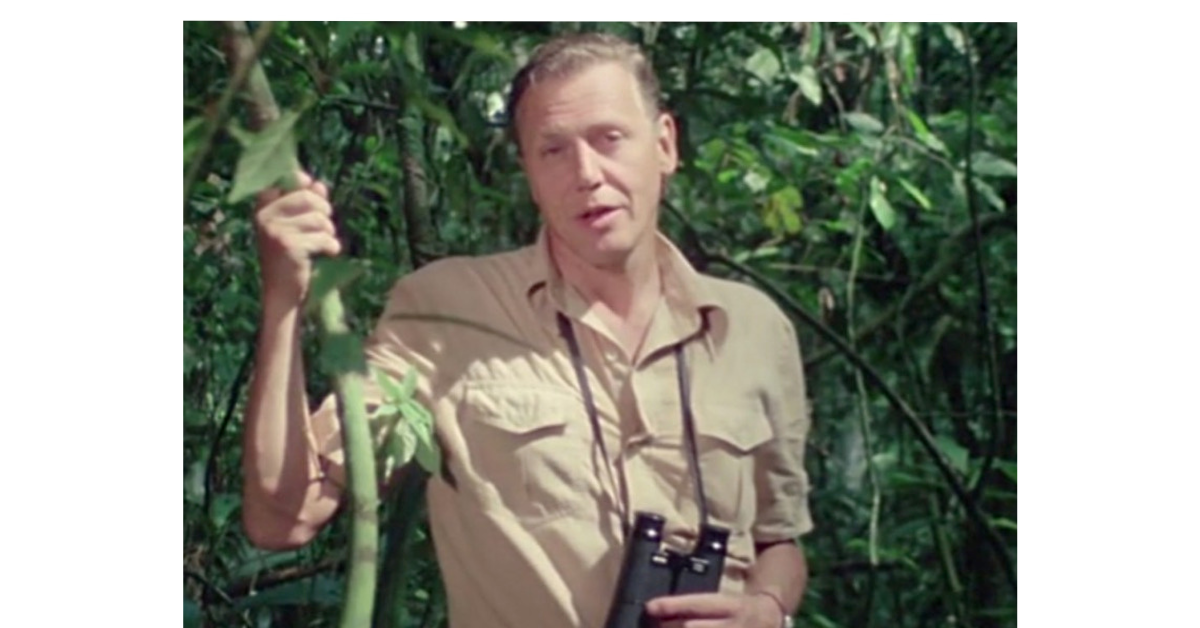
A Hundred Years of David Attenborough — And Still the Earth Whispers
Photo: BBC / Life on Earth archive
There are some public figures who dominate an era by force of personality, ideology, or ambition. And then there are those rarer individuals who become part of the moral and emotional landscape almost by quiet accumulation. Sir David Attenborough belongs firmly to the latter category.
Yesterday, on 8 May 2026, he turned one hundred. A century. It is an age that invites reflection not merely on the man himself, but on the extraordinary transformation of the world he has spent his life observing, documenting and interpreting for others.
For several generations across Britain and far beyond, Attenborough’s voice became inseparable from the living world itself. Rainforests, coral reefs, deserts, glaciers, mangroves, birds of paradise, migrating elephants, whale songs beneath Arctic ice — all arrived in our homes not as abstract environmental concepts, but as stories. That distinction matters. Because stories have always been humanity’s oldest technology for transmitting care.
Long before climate summits, hashtags, carbon dashboards, or “net-zero pathways”, people protected what they loved, and they loved what they understood. Attenborough understood this instinctively. He rarely shouted. He did not build a career on outrage. Nor did he lecture audiences with the moral superiority that sometimes infects contemporary environmental discourse. Instead, he did something infinitely more subtle — and perhaps more powerful. He taught people to look. To notice. To slow down long enough to observe a hummingbird hovering over a flower, the movement of a shoal of fish, the silence of a forest canopy before rain.
There is something deeply British about this approach. Not the Britain of slogans or political tribalism, but an older tradition: curiosity, patience, understatement and quiet awe before the complexity of the natural world. And perhaps that is why Attenborough’s influence endured across generations and political divides. People sensed that he was not trying to recruit them into an ideological tribe. He was inviting them into a relationship. That distinction has become increasingly important. Because one of the paradoxes of modern environmental communication is that the louder the rhetoric has become, the more emotionally exhausted many people have grown.
Doom can mobilise briefly. But fatigue eventually follows. The danger is that environmental concern begins to resemble a permanent state of accusation — a moral hair-shirt in which ordinary pleasures themselves become suspect: driving, travelling, heating one’s home, eating well, living comfortably.
Yet very few people wish to live permanently in a state of civilisational guilt. And perhaps they should not have to.
At Harptree Books, this question quietly sits beneath much of our fiction. In The Three Mosquito Nets, Heather is not a saint, revolutionary or professional activist. She is simply a young woman trying to make sense of the world she inhabits and the responsibilities that come with that awareness.
The novel does not argue that humanity must renounce comfort, beauty, travel, warmth or aspiration. Nor does it pretend that complex global problems can be solved through simplistic gestures. Instead, it asks something more modest — but perhaps more realistic. What kind of relationship do we wish to have with the world around us? One of extraction alone? Or one that also contains stewardship, restraint, curiosity, gratitude and continuity? These are not entirely new questions.
Indeed, Attenborough’s century-long life has unfolded alongside one of the most extraordinary periods of material progress in human history. Longer life expectancy. Global aviation. Mass tourism. Medical breakthroughs. Digital communication. Rising prosperity for hundreds of millions. To acknowledge this is not environmental heresy. It is reality. Modernity has delivered extraordinary gains.
But modernity has also created a peculiar psychological distance between people and the systems that sustain life itself. Food appears wrapped in plastic beneath supermarket lighting. Water emerges invisibly from taps. Seasons become background noise to climate-controlled interiors.
Perhaps what Attenborough achieved better than anyone else was to narrow that distance. Not through panic. But through reconnection. And this may explain why, even at one hundred years old, he continues to command such extraordinary affection. People trust him. Not because he claims perfection. But because his lifelong fascination with the living world feels genuine.
In an age increasingly dominated by synthetic outrage, algorithmic attention and performative certainty, genuine curiosity has become surprisingly rare. Attenborough never seemed to lose it. Nor, importantly, did he lose his sense of wonder.
And wonder matters. Because without wonder, environmentalism risks becoming merely administrative. Targets. Compliance. Reporting frameworks. Carbon accounting. Necessary perhaps — but emotionally insufficient.
Human beings protect what moves them. Stories move them. Beauty moves them. Place moves them. Memory moves them.
A child seeing giant tortoises for the first time. A diver encountering coral reefs. A walk through forests after rain. The smell of sea air arriving before the shoreline itself becomes visible. These experiences create attachment. And attachment creates care. Perhaps that is why fiction still matters in conversations about the future.
Statistics inform. But stories linger. Long after reports are forgotten, characters remain. Voices remain. Places remain. The emotional residue of narrative often travels further than argument. Which brings us, perhaps unexpectedly, back to Heather. The recently launched I Am Heather Challenge was never intended as a piece of performative online activism. Nor as a marketing gimmick wrapped in environmental language. At its heart sits a far simpler idea: that stories can still create moments of recognition between strangers. A short video. A sentence passed from one person to another. A small gesture of participation. Nothing world-changing in itself.
And yet history is often shaped by accumulations of small gestures rather than singular grand declarations. Attenborough understood this too. A lifetime of patient observation. A lifetime of small acts of communication. A lifetime spent persuading people not through fear alone, but through fascination. One hundred years on, that may be his greatest legacy. Not merely that he warned humanity. But that he reminded it to pay attention. And perhaps, in an age increasingly characterised by noise, speed and distraction, paying attention is already a form of care.
When the Water Comes to the Door
Last week, France was struck by flooding of a scale described in many places as historic. Here in my adopted home of Maine-et-Loire, the impact has been particularly severe. As of today — Sunday 22 February 2026 — the département remains on red alert, with swollen rivers breaching banks, roads cut, neighbourhoods isolated and entire landscapes temporarily reclaimed by water.
In Angers, Mayor Christophe Béchu — formerly France’s Minister for Ecological Transition and Territorial Cohesion — reported that the River Maine had reached levels not seen in decades. Across the region, residents have watched the water rise with a mixture of stoicism, anxiety and weary familiarity: furniture lifted, sandbags stacked, travel plans abandoned, daily routines reduced to waiting.
This is not a call to panic. Nor is it an exercise in apocalyptic rhetoric. It is simply an invitation to notice. Because climate change rarely announces itself with theatrical flourish. More often, it arrives as inconvenience: a closed road, a cancelled train, a damp cellar, a school shut for safety. Only gradually does inconvenience accumulate into disruption, and disruption into something that begins to reshape how a place lives.
What makes events like this unsettling is not only their scale, but their frequency. Floods, droughts, heatwaves and storms are no longer isolated anomalies; they are becoming part of the background rhythm of life across much of the world — from the Loire Valley to the Ganges delta, from California to the Sahel.
In The Three Mosquito Nets, the story travels through places where climate change is not debated but lived: farmers negotiating shifting seasons, coastal communities watching shorelines retreat, families adapting quietly because adaptation is the only option available. The book does not preach solutions. It listens.
Standing on a familiar street now transformed into a temporary canal, one realises how thin the line is between “there” and “here”. Between a distant humanitarian headline and a personal experience. Between sympathy and participation. It would be easy — and comforting — to frame this solely as a natural disaster, an unfortunate meteorological coincidence. Yet the broader scientific consensus points to a warming climate intensifying the water cycle: wetter wet periods, drier dry periods, and extremes that stretch infrastructure and communities beyond what they were designed to withstand. None of this requires abandoning modern life, nor embracing ascetic virtue as a badge of moral purity. Respect for the environment is not about rejecting progress; it is about recognising limits. The same ingenuity that built our cities can help preserve them — if we choose foresight over complacency.
For now, though, the immediate reality is simpler. People check river gauges. Insurance forms are downloaded. Volunteers fill sandbags. Neighbours help neighbours move belongings upstairs. Life narrows to essentials.
And the water waits for no one.
If there is a lesson here — one echoed throughout The Three Mosquito Nets — it is that climate change is not primarily a story about temperature charts or policy debates. It is a story about vulnerability, resilience and the quiet dignity with which ordinary people confront forces larger than themselves.
This is not alarmism. It is observation.
And perhaps, just perhaps, a reminder that the places we call home are more fragile — and more precious — than we like to believe.
To be notified of new essays and fiction from Éditions Harptree, please subscribe here: